Brentwood, Oakley, Antioch and Discovery Bay
Pool Leak Detection & Repair in Brentwood, CA
Topping off the pool more than usual? A leak wastes water, washes out chemicals, and can undermine the ground around the shell. Finding it is a job of testing, not guessing.
No obligation. Repairs and equipment only, not weekly cleaning.
Pool Leak Detection: quick answers
How urgent is it?
Not an emergency unless water is pooling by the equipment or the house, but don't let it run all season. Water escaping under the deck and shell can wash out soil. Book within a week or two.
How long does it take?
Detection is usually one visit of a few hours. Skimmer, fitting and light-niche repairs are often done on the same visit or soon after. Underground line repairs take longer because concrete may have to be cut and patched.
What changes the price?
- Where the leak is: a fitting or skimmer joint costs far less than a broken underground line
- Whether the deck has to be cut open to reach the pipe
- The surface (plaster, pebble or vinyl) if the shell itself needs patching
- Whether the quote covers detection only, or detection plus the repair
The Brentwood factor
Heat hides leaks here. The state's landscape water table puts Brentwood's July reference evapotranspiration at about 7.9 inches, roughly a quarter inch a day (MWELO Appendix A (opens in a new tab)). That's a measure for grass, not pools, but it shows how much water a Brentwood summer pulls out of the air. The area's clay soils also shrink and swell with moisture (USDA soil survey (opens in a new tab)), and a leak that keeps that soil wet makes deck movement worse.
Signs it's a leak, not the weather
- You add water every few days
- Even in mild weather, when evaporation is low.
- The level drops faster with the pump on
- Points toward the pressure side: return lines or equipment.
- It stops dropping at the same spot
- Often the height of a skimmer, a light, or a return fitting.
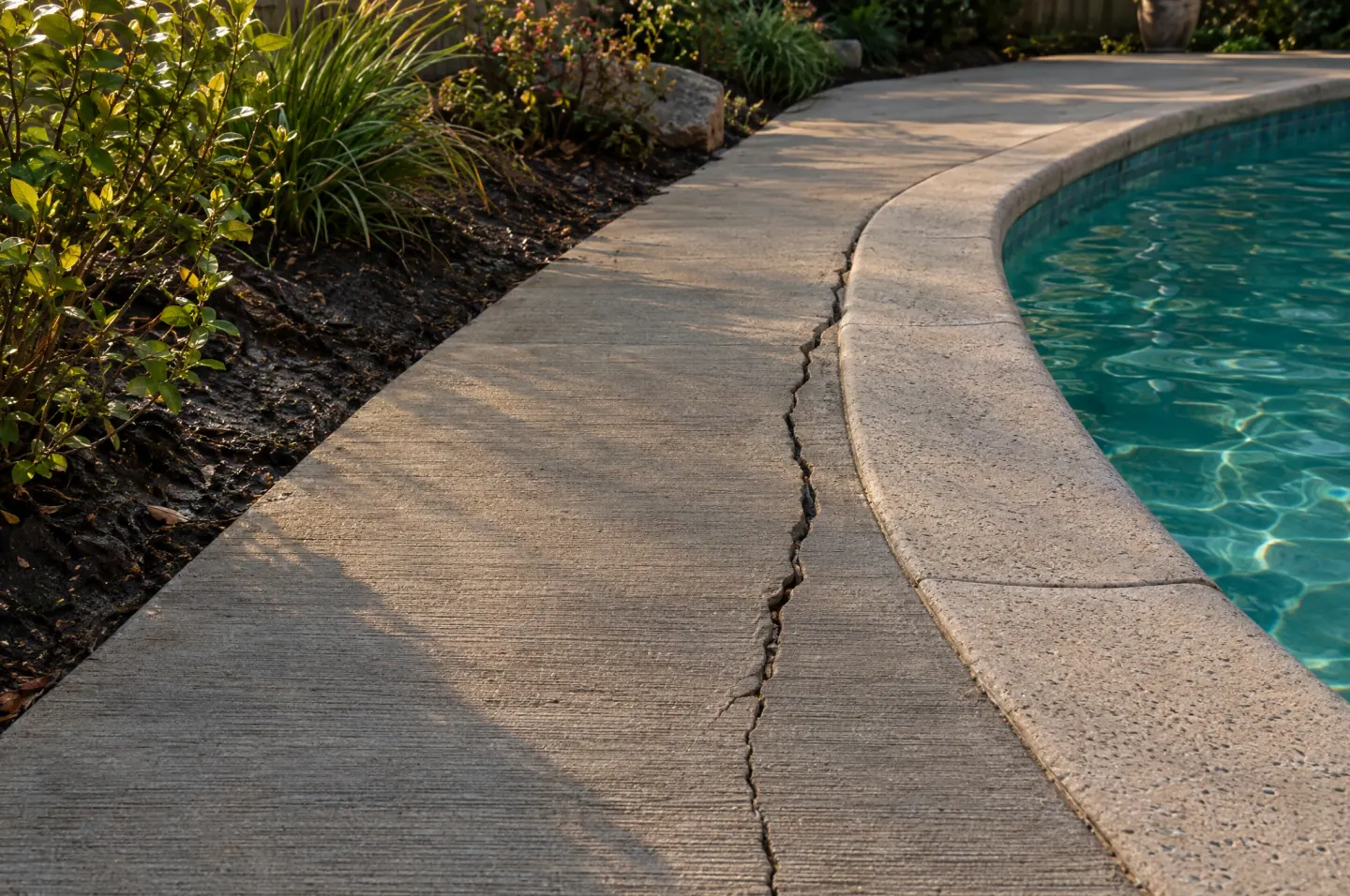
- Wet spots, soggy lawn, or cracks
- Damp ground near the pool or the equipment pad, or new cracks in the deck or plaster.
First: is it really a leak?
Pools lose water to evaporation every day, and East County summers push that number up: hot afternoons, low humidity, and wind across the water. A common rule of thumb is about a quarter inch a day, more in a heat wave. The quick way to separate evaporation from a leak is the bucket test: a bucket of pool water on the step loses water to evaporation at the same rate as the pool, so any extra drop in the pool is a leak. Step-by-step instructions are in pool leak or evaporation?.
Turn off the auto-fill first
An automatic fill valve can hide a leak for months by quietly topping the pool back up. Shut it off before any test, and check your water bill for an unexplained jump.
Where pool leaks usually are
| Where | Clues | Typical fix |
|---|---|---|
| Skimmer throat | Level stops at the bottom of the skimmer opening; a crack where the skimmer meets the shell | Seal or rebuild the skimmer joint |
| Light niche | Level stops at the light; conduit or cord seal has failed | Reseal the conduit, replace the lens gasket, or repair the light |
| Return fittings | Loses more with the pump running | Replace fittings and gaskets |
| Underground plumbing | Loses water with the pump on and off; wet ground between pool and pad | Pressure-test lines, then repair or reroute the broken section |
| Main drain | Keeps dropping below the lowest fitting | Repair the drain body or pipe |
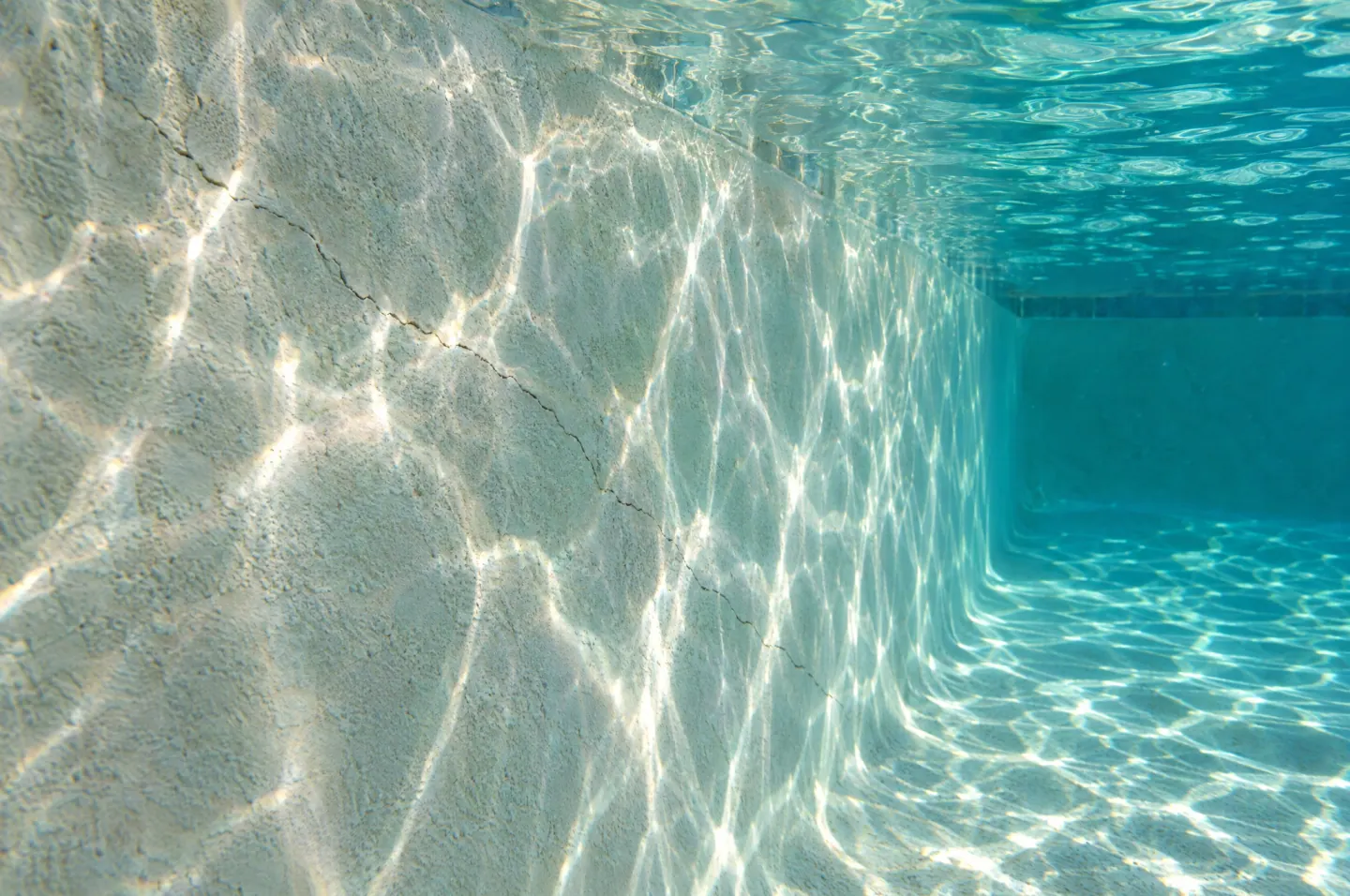
| Shell or plaster | Visible cracks, hollow-sounding plaster, delamination | Patch the crack; widespread damage points to resurfacing |
| Equipment pad | Drips or puddles at the pump, filter, heater, or valves | Replace seals, O-rings, or unions (equipment repair) |
How professional leak detection works
- Measuring the loss with the pump on and off, which narrows it to the suction side, the pressure side, or the shell.
- Dye testing at fittings, cracks, and the light niche. A diver or a pole puts a drop of dye near the suspected spot and watches whether it gets pulled in.
- Pressure testing each plumbing line by capping it and watching whether it holds pressure.
- Acoustic listening along underground lines to pinpoint a break before anything is dug up.
The goal is to open the deck in one place, not five. It's worth asking which of these tests will be used and whether the price covers detection only, or detection plus the repair.
Is pool leak detection what you need?
Call about this when
- You top off the pool more than once a week in mild weather
- A bucket test shows the pool dropping faster than the bucket
- The water level always stops at the same height
- Wet ground, soggy lawn or new deck cracks near the pool or the equipment
It's probably something else when
- The bucket and the pool drop the same amount: that's evaporation
- The only drip is under the pump itself: start with pool pump repair
- You need weekly cleaning or chemical service
What pool leak detection usually costs
Leak detection usually runs somewhere around $150–$1,200+, and the repair after it anywhere from a couple of hundred dollars for a fitting or skimmer to $3,000 or more when underground plumbing has to be dug up. Treat these as rough ranges: your price depends on where the leak is and how hard it is to reach.
Rough ranges, not a quote; every pool is different. More ranges: pool repair costs in Brentwood.
Why fixing it soon matters
A leak doesn't just cost water. Fresh fill water throws off the chemistry, and water escaping under the shell or deck can wash out soil, which leads to settling and cracks. A small leak found early is usually a fitting or a seal. The same leak left for a season can turn into plumbing and plaster work. If the leak is in the tile line or the plaster, see pool tile repair and pool resurfacing.
Pool Leak Detection: common questions
Why is my pool losing 1 inch of water a day?
An inch a day is more than evaporation alone usually explains, even in hot, windy weather. Splash-out and backwashing can add to it, but a steady inch a day is a strong sign of a leak. Run a bucket test to confirm, then get it located.
How much does pool leak detection cost?
Roughly $150–$1,200+ for detection, depending on the pool and how many tests it takes. The repair is usually priced separately once the leak is found. See the cost guide.
Can I find a pool leak myself?
You can confirm there is one with a bucket test, and sometimes spot an obvious one with dye at the skimmer or light. Leaks in underground lines or the main drain need pressure testing and listening equipment to find without digging up the deck.
Is a pool leak covered by homeowners insurance?
It depends on the policy and the cause. Many policies exclude gradual leaks and wear but may cover sudden damage. Check with your insurer before work starts.
Related pool repairs
Pool Resurfacing
Rough, etched, stained, or delaminating plaster. Replaster or upgrade to quartz or pebble.
Pool Tile Repair
Loose, cracked, or missing waterline tile, calcium buildup, and damaged coping stones.
Pool Light Repair
Light out, flickering, fogged with water, or tripping the GFCI. Repair or convert to LED.
Pool down, leaking, or won't heat?
Call or send a 30-second request for a pool repair quote in Brentwood, Oakley, Antioch or Discovery Bay.